How Agents Can Use Educational Events to Build Trust and Book Appointments
July 9th, 2026
11 min read
Medicare Seminar Marketing
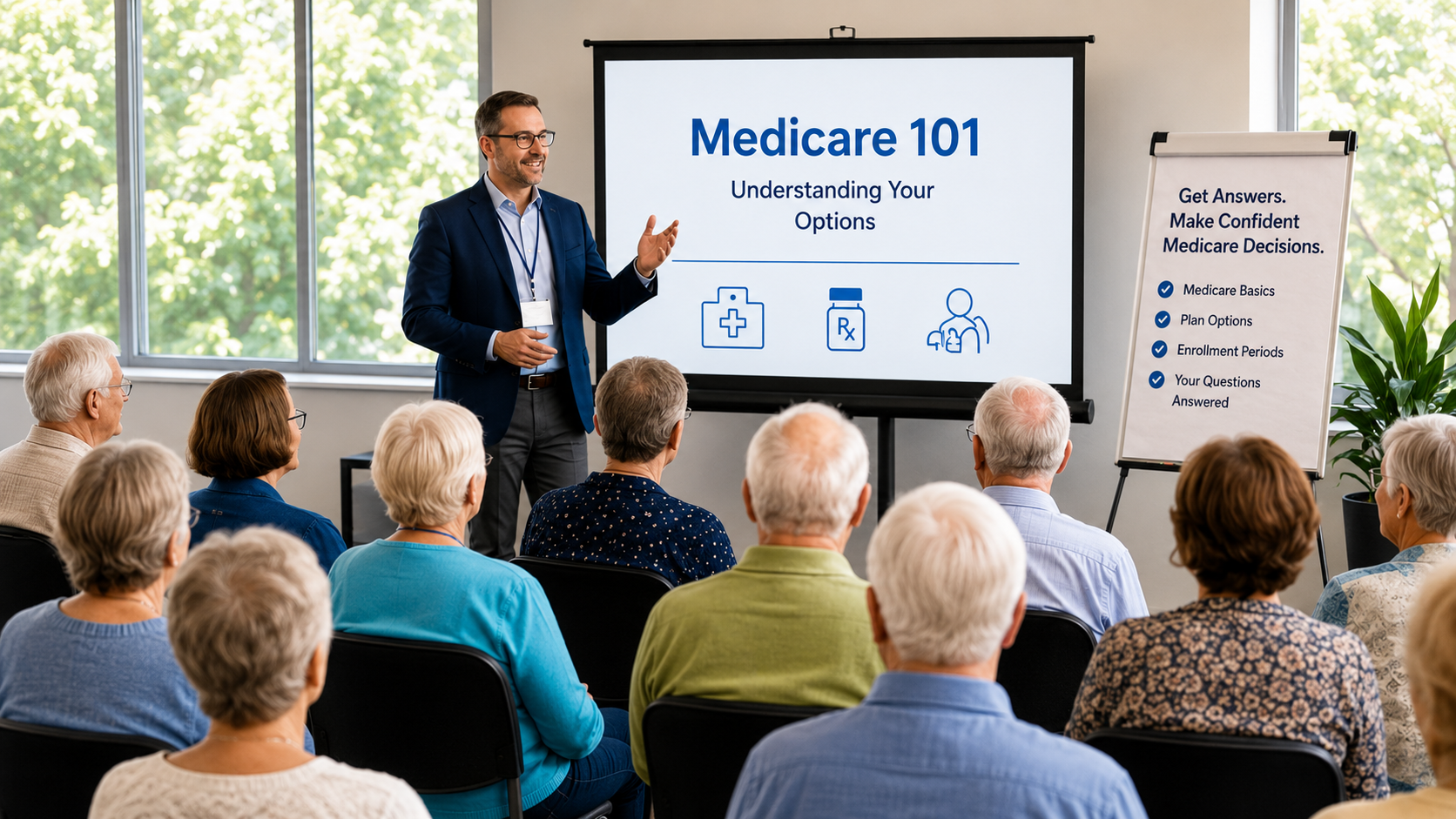
Medicare seminar marketing remains one of the most effective ways for insurance agents to build local trust, educate prospects, and create appointment opportunities.
Even in a world of Facebook ads, online lead forms, email campaigns, and automated follow-up, many Medicare beneficiaries still want something simple: a local professional who can explain their options clearly.
That is where Medicare seminars can be powerful.
A well-run Medicare seminar gives agents a way to meet prospects before they are ready to buy, answer common questions in a low-pressure setting, and position themselves as a trusted resource in the community.
This matters because the Medicare market continues to be large, competitive, and highly active. In 2026, more than half of eligible Medicare beneficiaries are enrolled in Medicare Advantage, with 35.2 million Medicare beneficiaries enrolled in MA plans, according to KFF. That represents 55% of eligible beneficiaries with both Medicare Part A and Part B. Medicare Advantage enrollment has grown significantly over time, rising from 19% of eligible beneficiaries in 2007 to 55% in 2026.
For agents, that means two things are true at the same time:
- There is still major opportunity in the Medicare market.
- Agents need a better way to stand out locally.
Medicare seminars can help with both.
A Medicare seminar is not just an event. Done correctly, it becomes a trust-building system that can support education, lead generation, appointment setting, and long-term client relationships.
For agents who want help planning, promoting, and following up after events, PSM Brokerage offers a dedicated guide on how to host a compliant Medicare seminar, along with broader Medicare products and resources for insurance agents.
Why Medicare Seminars Still Work for Local Agents
Medicare can feel overwhelming for consumers. Many people approaching age 65 are trying to understand unfamiliar terms, enrollment windows, plan options, prescription drug coverage, provider networks, penalties, and the difference between Medicare Advantage and Medicare Supplement.
Even current Medicare beneficiaries may need help reviewing annual changes, understanding the Annual Notice of Change, comparing plan updates, or deciding whether their current coverage still fits.
That creates a strong educational opportunity for local agents.
A Medicare seminar gives prospects a comfortable way to learn before they commit to a one-on-one appointment. It also gives agents a way to create visibility in the community without making every interaction feel like a sales pitch.
For new agents, seminars can help build local name recognition. For experienced agents, they can support AEP preparation, client retention, referrals, and ongoing community presence.
A Medicare seminar can help agents:
- Build local trust
- Educate prospects before appointments
- Create warmer leads
- Generate appointment requests
- Strengthen referral relationships
- Stay visible before AEP
- Support turning-65 marketing
- Position themselves as a local Medicare resource
The strongest seminars are not built around pressure. They are built around clarity.
When attendees leave feeling more informed, they are more likely to view the agent as a credible resource.
Medicare Seminar Marketing Works Best When It Is Educational First
Agents should be careful not to treat every Medicare event the same way.
There is a major difference between an educational event and a sales event. Agents need to understand that distinction before planning, promoting, or presenting a seminar.
At a high level, an educational Medicare event is designed to provide general Medicare information. A sales event is designed to discuss specific plans, benefits, premiums, or carriers.
That difference affects what agents can say, what materials they can provide, how the event can be promoted, and what actions can happen during or after the event.
PSM’s guide on best practices for hosting a Medicare sales or educational event is a helpful internal resource for agents who want to better understand this distinction.
Educational vs. Sales Events: What Agents Need to Understand
Here is a simple comparison agents can use when thinking through event strategy.
| Event Type | Primary Goal | What It Usually Covers | Best Use Case |
|---|---|---|---|
| Educational Medicare Event | Teach general Medicare concepts | Medicare basics, enrollment periods, Original Medicare, Medicare Advantage, Medicare Supplement, Part D, common mistakes | Building trust and attracting prospects early in the decision process |
| Sales Event | Discuss specific plan options or carrier information | Plan benefits, premiums, formularies, networks, plan comparisons, enrollment next steps | Helping prospects evaluate specific plan options after proper requirements are met |
| Client Review Event | Educate existing clients and encourage reviews | Annual changes, ANOC reminders, AEP preparation, provider/drug review reminders | Retention, referrals, and annual client engagement |
| Community Workshop | Build local visibility and partnerships | General Medicare education, senior planning topics, fraud prevention, retirement basics | Networking with libraries, senior centers, churches, and community organizations |
The key is to choose the right event format for the goal.
If the goal is broad education and local trust-building, a Medicare 101 seminar may be the best fit. If the goal is to discuss specific plan details, agents need to follow the applicable requirements for sales events and approved materials.
A good Medicare seminar should make the attendee feel smarter, not pressured.
Best Locations for Medicare Seminars
The location of a Medicare seminar can affect attendance, comfort level, credibility, and overall event quality.
Agents should choose locations that are easy to find, accessible, professional, and familiar to the senior community.
Good Medicare seminar locations may include:
- Public libraries
- Senior centers
- Community centers
- Local restaurants with private rooms
- Churches or faith-based community rooms
- Retirement communities, when appropriate
- Local chambers of commerce
- Wellness centers
- Independent pharmacies
- Financial planning offices
- Real estate offices with senior-focused relationships
The best location is not always the most expensive. In many cases, the best location is the one your audience already trusts.
For example, a public library or senior center may feel more educational and neutral than a hotel conference room. A local restaurant may help create a warmer, more casual environment. A community center may make it easier to attract people who already attend local programs.
Agents should also consider practical details:
- Parking availability
- ADA accessibility
- Room size
- Lighting and sound
- Seating arrangement
- Wi-Fi access
- Screen or projector access
- Signage
- Check-in area
- Weather considerations
- Distance from the target audience
A good seminar experience starts before the presentation begins.
If attendees have trouble parking, finding the room, hearing the speaker, or seeing the slides, the event becomes harder to enjoy and less likely to convert into appointments.
What to Include in a Medicare 101 Seminar
A Medicare 101 seminar should be simple, clear, and structured around the questions people are already asking.
The goal is not to overwhelm attendees with every detail. The goal is to help them understand the basics and know when they may need one-on-one guidance.
A strong Medicare 101 seminar may include:
1. What Medicare Is
Start with the basics. Explain Original Medicare, Medicare Part A, Medicare Part B, Medicare Part C, and Medicare Part D in plain language.
2. When People Can Enroll
Cover common enrollment windows, including the Initial Enrollment Period, Annual Enrollment Period, Open Enrollment Period, and Special Enrollment Periods at a high level.
3. Medicare Advantage vs. Medicare Supplement
This is one of the biggest areas of confusion for consumers. Keep the explanation balanced and educational.
Agents can explain that Medicare Advantage and Medicare Supplement work differently, and the right fit depends on a person’s health needs, budget, provider preferences, travel habits, prescription drugs, and overall coverage goals.
PSM also offers broader Medicare Advantage and Medicare Supplement resources for agents to help agents better support these conversations.
4. Prescription Drug Coverage
Explain why drug coverage matters and why formularies, pharmacy networks, tiers, and annual plan changes should be reviewed.
5. Common Medicare Mistakes
This section often gets attention because it feels practical. Examples include missing enrollment deadlines, assuming every doctor accepts every plan, not reviewing prescriptions, or failing to understand network differences.
6. What Changes Each Year
Help attendees understand why Medicare plan reviews matter, especially before or during AEP.
7. What to Bring to a One-on-One Appointment
This creates a natural bridge to appointment setting. Agents can suggest that prospects bring a Medicare card, prescription list, preferred pharmacy, provider list, current plan information, and questions.
For agents looking for a presentation resource, PSM has a Medicare 101 presentation that can help support consumer education.
Sample Medicare Seminar Agenda
Here is a practical agenda agents can use for a 45-minute educational seminar.
| Time | Segment | Purpose |
|---|---|---|
| 0–5 minutes | Welcome and housekeeping | Set expectations, introduce the topic, explain the educational purpose |
| 5–15 minutes | Medicare basics | Explain Parts A, B, C, and D in simple terms |
| 15–25 minutes | Coverage paths | Compare Original Medicare, Medicare Advantage, Medicare Supplement, and Part D at a high level |
| 25–32 minutes | Enrollment windows | Explain key timing considerations and common mistakes |
| 32–38 minutes | Annual review reminders | Discuss why coverage may need to be reviewed each year |
| 38–43 minutes | What to bring to an appointment | Help attendees understand next steps |
| 43–45 minutes | Closing and appointment request | Invite attendees to schedule a one-on-one conversation |
This agenda keeps the seminar focused and avoids turning the event into a long lecture.
A shorter, cleaner seminar is often better than a dense presentation that overwhelms the audience.
How to Promote a Medicare Seminar
A successful seminar usually needs multiple promotion channels. Relying on one tactic can limit attendance.
Agents should think of seminar promotion as a small local campaign, not a single announcement.
Common Medicare seminar promotion channels include:
- Direct mail
- Facebook ads
- Facebook event posts
- Email invitations
- Client referral invitations
- Local partner promotion
- Flyers in approved community spaces
- Senior center calendars
- Library event calendars
- Local newspaper event listings
- Church bulletins, when appropriate
- Pharmacy or provider office relationships, when appropriate
- Phone outreach to existing prospects
- Retargeting campaigns, when available
The best channel depends on the market, budget, audience, and timing.
Direct Mail
Direct mail can work well for seminar marketing because it allows agents to target specific ZIP codes and age-based household data where available through compliant vendors. Mailers should be clear, professional, and easy to understand.
A strong seminar mailer should include:
- Topic
- Date
- Time
- Location
- What attendees will learn
- RSVP method
- Educational positioning
- Required disclaimers, when applicable
Facebook Ads
Facebook can be useful for promoting educational events, especially when paired with simple lead forms or event registrations. Agents should remember that insurance advertising may fall under special ad category rules, which can limit certain targeting options.
A simple Facebook ad can promote the value of the event without overcomplicating the message.
Example angle:
“Turning 65 soon? Join a local Medicare 101 educational event and learn the basics before you make a decision.”
Email Marketing
Email works especially well for existing prospects, past leads, referral partners, and current clients who may know someone approaching Medicare eligibility.
Agents can use email to invite people to the seminar, remind registrants before the event, and follow up afterward.
For agents who need help staying organized, PSM’s marketing automation resources for insurance agents can support email sequences, follow-up workflows, client nurture campaigns, and retention communication.
Local Partnerships
Local partnerships can be powerful because they borrow trust from organizations that already have relationships with the audience.
Potential partners may include:
- Libraries
- Senior centers
- Financial professionals
- Tax professionals
- Estate planning attorneys
- Pharmacies
- Community organizations
- Retirement communities
- Local nonprofits
- Churches
- Veteran groups
The best partnerships are not one-sided. Agents should think about how the event helps the organization serve its audience with useful education.
Marketing Materials
Professional materials matter. Flyers, mailers, event signage, presentation slides, handouts, and follow-up pieces all contribute to the credibility of the event.
PSM’s Marketing Hub gives agents access to customized marketing materials designed to save time and support more professional outreach.
How to Turn Seminar Attendees Into Appointments
Getting people in the room is only the first step.
The real value of Medicare seminar marketing comes from what happens next.
Agents should have a simple appointment-setting process before the event begins. That means knowing how attendees will check in, how questions will be handled, how one-on-one appointments will be offered, and how follow-up will happen.
A good seminar follow-up process may include:
- Capture attendee information at registration or check-in.
- Ask attendees if they would like a one-on-one appointment.
- Provide a simple appointment request card or digital scheduling option.
- Follow up with attendees within 24–48 hours.
- Send a thank-you message with helpful next steps.
- Add attendees to the appropriate CRM follow-up category.
- Continue educational nurture for attendees who are not ready yet.
The appointment offer should feel natural.
Instead of creating pressure, agents can position the appointment as a way to apply the general information to the person’s specific situation.
Example:
“Today we covered Medicare at a high level. If you would like help reviewing your own doctors, prescriptions, timeline, or coverage options, you can schedule a one-on-one appointment.”
That is clear, helpful, and appropriate.
For agents who want to better manage event follow-up, PSM’s CRM solutions for insurance agents can help organize attendees, track next steps, automate reminders, and prevent opportunities from slipping through the cracks.
Follow-Up Workflow After a Medicare Seminar
Seminar follow-up should be planned before the event happens.
Here is a simple workflow agents can use.
| Timing | Follow-Up Action | Goal |
|---|---|---|
| Same day | Add attendees and no-shows to CRM | Keep event data organized |
| Within 24 hours | Send thank-you email or text, when permitted | Stay visible while the event is fresh |
| Within 24–48 hours | Call appointment requests first | Prioritize highest-intent attendees |
| Within 3–5 days | Follow up with attendees who did not schedule | Create second appointment opportunity |
| 1–2 weeks later | Send educational Medicare content | Continue nurturing |
| 30 days later | Re-engage undecided prospects | Capture delayed interest |
| Before AEP or key enrollment timing | Send review reminder | Convert education into future action |
The most important mistake to avoid is waiting too long.
If an attendee took time to attend a seminar, there is usually some level of interest. But interest fades quickly when there is no follow-up.
A CRM and automation system can help agents stay consistent without manually rebuilding the process after every event.
Common Mistakes Agents Make When Hosting Medicare Seminars
Medicare seminars can work very well, but they can also fall flat when agents skip important details.
Here are some common mistakes to avoid.
Mistake 1: Making the Seminar Too Sales-Heavy
If the event is promoted as educational, it should feel educational. Attendees should not feel like they walked into a hard sales presentation.
Mistake 2: Covering Too Much Information
Medicare is complicated. Trying to explain everything in one seminar can overwhelm attendees. Focus on the key questions people need answered first.
Mistake 3: Using Confusing Language
Terms like formulary, MOOP, underwriting, SEP, IEP, MAPD, and guaranteed issue may be familiar to agents, but not to consumers. Use simple explanations.
Mistake 4: Choosing the Wrong Location
A poor location can hurt attendance and attendee experience. Parking, accessibility, room setup, and comfort matter.
Mistake 5: Not Promoting Early Enough
Seminar promotion usually needs lead time. Agents should avoid waiting until the week of the event to start marketing.
Mistake 6: Not Having a Follow-Up Plan
The event is not complete when the presentation ends. Without follow-up, many appointment opportunities are lost.
Mistake 7: Not Understanding Compliance Requirements
Agents need to understand the difference between educational and sales events, use appropriate materials, and follow applicable Medicare marketing rules.
PSM’s compliant Medicare seminar guide can help agents think through the planning, promotion, hosting, and follow-up process.
Medicare Seminar Marketing Checklist
Before hosting a seminar, agents should confirm the basics.
Event Planning
- Choose the seminar topic.
- Select the event type.
- Confirm the location.
- Reserve the room.
- Check parking and accessibility.
- Confirm room setup.
- Prepare presentation materials.
- Prepare sign-in or registration process.
- Prepare appointment request cards.
- Review applicable compliance guidelines.
Promotion
- Create event flyer or mailer.
- Build email invitation.
- Create social media posts.
- Prepare Facebook ad or event listing.
- Contact local partners.
- Add event to local calendars where appropriate.
- Confirm RSVP process.
- Send reminders before the event.
Presentation
- Keep content simple.
- Use plain language.
- Avoid unnecessary jargon.
- Leave time for questions.
- Stay aligned with the event type.
- Provide clear next steps.
Follow-Up
- Add attendees to CRM.
- Contact appointment requests first.
- Send thank-you communication.
- Follow up with undecided attendees.
- Continue nurture campaigns.
- Track appointments and outcomes.
- Review what worked before planning the next event.
How Medicare Seminars Fit Into a Bigger Agent Marketing Strategy
Medicare seminar marketing should not stand alone. It works best when connected to a broader marketing system.
For example, an agent may use:
- Direct mail to drive registrations
- Facebook ads to increase awareness
- Email reminders to improve attendance
- CRM follow-up to book appointments
- Marketing automation to nurture undecided prospects
- Referral campaigns to invite friends or family members
- Medicare review campaigns to re-engage clients before AEP
This creates a more complete marketing engine.
Agents who want to build this kind of structure can use PSM’s insurance agent marketing resources, marketing automation platform, and referral marketing platform for insurance agents to support outreach before and after events.
For agents looking for more lead generation ideas, PSM’s guide on 14 ways to generate Medicare leads is another strong supporting resource.
How PSM Brokerage Supports Medicare Seminar Marketing
PSM Brokerage helps independent agents do more than access Medicare contracts. PSM provides resources, tools, and support designed to help agents grow more efficiently.
For Medicare seminar marketing, that support may include:
- Medicare product support
- Educational resources
- Marketing materials
- Seminar planning guidance
- Follow-up strategy
- CRM and automation support
- Lead generation resources
- Training for new and experienced agents
- Guidance on building a more repeatable sales process
Agents can also access PSM’s insurance agent training platform, which includes training resources designed to help agents improve sales conversations, client service, marketing, and agency growth.
For newer agents, the new insurance agent training path can provide additional structure and confidence as they build their Medicare business.
Final Thoughts: Medicare Seminars Build Trust Before the Appointment
Medicare seminar marketing works because it gives agents a way to lead with education.
Instead of asking prospects to schedule a meeting with someone they do not know, a seminar creates a lower-pressure first step. Attendees can learn, ask questions, evaluate the agent’s credibility, and decide whether they want more personalized help.
That trust-building process is valuable.
The best Medicare seminars are clear, compliant, educational, and well-organized. They are supported by good promotion before the event and consistent follow-up afterward.
For agents who want to grow locally, build stronger community visibility, and create more appointment opportunities, Medicare seminars can still be one of the most effective marketing strategies available.
Need Help Building a Medicare Seminar Strategy?
PSM Brokerage gives independent insurance agents access to marketing support, educational materials, Medicare resources, CRM tools, lead generation options, and guidance to help make local events easier to execute.
If you are ready to host better Medicare seminars, improve your follow-up, and build a more consistent local marketing strategy, PSM can help you take the next step.
As CEO & Partner of PSM Brokerage, Lucas helps guide the company’s strategy for supporting independent insurance professionals with training, marketing, technology, carrier access, and business development resources.
Topics:





%20-%202025-06-24T140652.482.png?width=600&height=338&name=Marketing%20Hub%20CTA%20Image%20(600%20x%20338%20px)%20-%202025-06-24T140652.482.png)






.png?width=1536&height=1024&name=996d14f4-7288-418b-966e-b89d57c32719%20(1).png)


.png?width=1672&height=941&name=download%20(2).png)
.png?width=1774&height=887&name=download%20(5).png)
.png?width=1536&height=1024&name=download%20(1).png)


%20(1200%20x%20628%20px)%20-%202026-07-08T112014.415-1.png?width=600&height=338&name=Marketing%20Hub%20CTA%20Image%20(600%20x%20338%20px)%20(1200%20x%20628%20px)%20-%202026-07-08T112014.415-1.png)
