Digital Agent or Local Agent: Which Growth Path Fits You?
There’s no single way to build a successful insurance business. Your personality should guide your growth strategy. Explore the two paths below to find tools, training, and resources that fit how you naturally work.

The Digital Agent Path
The Digital Agent builds relationships primarily through phone calls, virtual appointments, online marketing, purchased leads, and consistent digital follow-up.
This path may fit you if you:
- Are comfortable speaking with prospects by phone
- Prefer working remotely or from a home office
- Enjoy technology and organized sales processes
- Want to serve prospects across multiple markets
- Have a budget for online leads or advertising
- Are willing to contact and follow up with leads consistently
- Want to build a sales process that can scale

Step 1: Create Your Lead Generation Plan
A Digital Agent needs a reliable and repeatable way to start new conversations. Rather than depending on a single source, build a balanced lead-generation plan that fits your budget, schedule, and sales goals.
Your strategy may include:
- Purchased insurance leads
- Online advertising
- Social media outreach
- Search engine traffic
- Email marketing
- Client referrals
- Professional partnerships
- Lead reactivation campaigns
Start by choosing two or three channels you can manage consistently. Define how many leads, calls, conversations, and appointments you need each week, then track which sources produce the best results.
Training and Resources on Lead Generation
Weekly Lead Generation Plan for Insurance Agents
Learn how to structure prospecting time, select your active lead sources, establish weekly activity targets, and build a repeatable pipeline.
How to Get Your First 10 Insurance Leads for Free
A short video training that shows newer agents how to begin generating conversations through their existing network without purchasing leads.
14 Proven Ways to Generate Medicare Leads
Explore a combination of referrals, educational outreach, community activity, digital marketing, video, and other lead-generation methods that can support a balanced local strategy.
LeadStar Compliant Lead Platform
Learn about PSM’s lead platform, including compliant lead generation, campaign tracking, AI-driven routing, budget controls, and pre-set appointment opportunities.
Facebook Ads for Insurance Agents: How They Work
Understand Meta’s lead-generation objective, Instant Forms, Special Ad Category requirements, audience development, and campaign structure.
Social Media Strategy for Insurance Agents
Build a more consistent online presence using social media, educational content, video, email, local SEO, and compliant marketing strategies.
Step 2: Improve Your Telesales
Working leads by phone requires more than making a large number of calls. A strong telesales process gives every prospect a consistent, professional experience—from the first call through the appointment and follow-up.
Your process should include a clear opening, thoughtful qualification questions, a structured needs assessment, documented permission to contact, accurate call notes, and a defined follow-up schedule.
Speed-to-lead
Call opening and intro
Prospect qualification
Needs assessment
Objection handling
Appointment setting
Call documentation
Follow-up cadence
Call recording requirements
Compliance procedures
Speed-to-Lead — Contact new leads as quickly as possible while their interest is still fresh. A fast response improves connection rates and increases the likelihood of booking an appointment.
Call Opening and Introduction — Use a clear, professional opening that identifies who you are, explains why you are calling, and gives the prospect a reason to continue the conversation.
Prospect Qualification — Confirm that the prospect is a good fit before moving deeper into the call. This may include reviewing location, eligibility, current coverage, timing, and the reason for their inquiry.
Needs Assessment — Ask thoughtful questions to understand the prospect’s priorities, concerns, current coverage, budget, providers, prescriptions, and preferred benefits before discussing potential options.
Objection Handling — Prepare for common concerns such as timing, cost, trust, confusion, or reluctance to change. Address objections calmly, answer the underlying concern, and guide the conversation forward without applying pressure.
Appointment Setting — Offer a clear next step and make scheduling easy. Confirm the date, time, meeting format, contact information, and what the prospect should have available for the appointment.
Call Documentation — Record important details immediately after each conversation, including the prospect’s needs, questions, objections, appointment status, follow-up date, and any required permissions.
Follow-Up Cadence — Use a consistent schedule for calls, texts, and emails rather than relying on a single attempt. Each follow-up should have a clear purpose and move the prospect toward the next appropriate step.
Call Recording Requirements — Understand when calls must be recorded, how recordings should be stored, and which conversations or portions of a conversation are subject to carrier, CMS, or organizational requirements.
Compliance Procedures — Follow all applicable rules for permission to contact, required disclosures, Scope of Appointment, documentation, call recording, marketing language, and protection of personal information.
Training and Resources for Telesales
Compliant Medicare Sales Scripts for Agents
Say the right thing, the right way—every time. In the fast-paced world of Medicare sales, compliance isn’t optional—it’s essential.
Insurance Agent Outreach: Texts and Emails That Work
Get ready-to-use text and email templates for warm outreach, prospect follow-up, and referral introductions. The training focuses on keeping communication short, personal, and helpful.
How to Book More Insurance Appointments From Leads
Learn how to improve speed-to-lead, use a consistent call cadence, qualify prospects, set appointments, confirm meetings, and reduce no-shows.
Insurance Follow-Up Cadence That Converts Leads
Build a four-stage follow-up system covering immediate response, daily attempts, weekly touches, and long-term lead nurturing.
Advanced Insurance Objection Handling
Explore a complete training track covering “I need to think about it,” “I already have a plan,” “just send me information,” and the difference between being assertive and being pushy.
Step 3: Build Your Online Presence
Your website and digital presence should help prospects quickly understand who you serve, what you offer, and how to contact you.
Before calling or scheduling an appointment, many prospects will search your name, review your website, check your online reviews, and look at your social media profiles. A professional digital presence helps establish credibility before the first conversation begins.
Build a stronger digital marketing foundation with the Social Media Strategy for Insurance Agents, which explains how to choose the right platforms, create useful content, maintain a consistent posting schedule, and strengthen audience relationships. You can also explore the Top 10 Marketing Ideas for Insurance Agents for practical ideas involving educational content, social proof, email outreach, video, referrals, community activity, and digital visibility. To strengthen your local reputation, the Google Reviews for Insurance Agents guide covers review requests, direct review links, QR codes, professional responses, and local search visibility.
For content development, How to Decide What to Write on Your Insurance Blog shows how to use client questions, customer research, keywords, and search behavior to identify helpful topics. AI for Insurance Agents - How to Work Smarter and Grow Faster explains how AI can support content creation, email communication, social media, lead management, and client follow-up. Finally, The Trust Stack - How Insurance Agents Can Build Credibility Before the First Call outlines the digital signals prospects may review before contacting you, including your website, reviews, agent profile, educational content, and follow-up process.
PSM Marketing Hub
PSM’s Marketing Hub gives independent agents access to practical marketing support, compliant materials, digital content, campaign guidance, and personalized strategy. Whether you need help improving your website, creating social media content, building trust online, promoting educational events, or developing a more consistent marketing plan, our team can help you put the right pieces in place.
Explore the PSM Marketing Hub and discover the tools, resources, and support available to help strengthen your visibility, attract more prospects, and grow your business.

Training and Resources for Marketing Online
Using AI to Create Insurance Marketing Content
Learn how to use AI to develop first drafts for blog posts, social media content, emails, and event promotions, then edit the material so it sounds natural and reflects your voice.
Local Marketing for Insurance Agents: Get Found Online
Learn how to improve your Google Business Profile, build a consistent review system, maintain accurate business listings, and create useful location pages.
Lead Forms vs. Landing Pages for Insurance Leads
Understand when to use an instant lead form, when to use a dedicated landing page, and how to structure each one to generate stronger appointment opportunities.
Facebook Ads for Insurance Agents: How They Work
Learn how Meta lead campaigns, Instant Forms, Special Ad Category requirements, first-party audiences, and educational advertising offers work together.
Explore More Digital Marketing Training
Explore Insurance Agent Marketing Resources. Find additional PSM guides covering social media, lead generation, Facebook marketing, educational events, digital content, and agency growth.
Step 4: Create a Lead Follow-Up System
Online leads frequently require multiple contact attempts before they respond or schedule an appointment. A CRM and defined follow-up cadence help you stay organized, document each interaction, and prevent prospects from disappearing after the first call.
Your follow-up system should make it easy to see where every prospect and client stands, what happened during the last interaction, and what action needs to happen next.
Keep Every Lead Moving Forward
Online leads frequently require multiple contact attempts before they respond or schedule an appointment. A CRM and defined follow-up cadence help you stay organized, document each interaction, and prevent prospects from disappearing after the first call.
Your follow-up system should make it easy to see where every prospect and client stands, what happened during the last interaction, and what action needs to happen next.
.png?width=700&height=876&name=Untitled%20design%20(85).png)

New Leads
Capture each new opportunity in one central system, including the lead source, contact information, product interest, and date received.
Contact Attempts
Document every call, voicemail, text, and email so you know which prospects have been contacted and when the next attempt should occur.
Appointments
Track appointment dates, meeting formats, confirmation status, preparation notes, and any required follow-up.
Enrollments
Monitor submitted applications, effective dates, carrier status, outstanding requirements, and post-enrollment follow-up.
Client Reviews
Schedule annual reviews, AEP check-ins, policy anniversaries, and other service touchpoints that help clients feel supported.
Referral Opportunities
Track when referrals were requested, who was referred, and what follow-up is needed with both the client and the new prospect.
Renewal and Retention Activity
Document post-sale check-ins, policy effective dates, renewal periods, service issues, and upcoming annual-review opportunities.
Training and Resources for Lead Follow-Up
How to Set Up a CRM for Insurance Agents
Learn how to build a practical CRM structure for organizing contacts, documenting interactions, assigning next steps, and tracking policy information without creating a system that is too complicated to maintain.
Insurance Follow-Up Cadence That Converts Leads
Create a repeatable follow-up schedule that outlines when to call, text, email, and move unresponsive leads into long-term nurturing instead of giving up after the first attempt.
AI-Powered Follow-Up for Insurance Agents
Learn how to use AI to draft personalized follow-up messages, annual-review invitations, renewal reminders, AEP check-ins, and other client communications more efficiently.
After the Insurance Sale: Client Follow-Up Basics
Build a post-enrollment process that sets expectations, confirms coverage, addresses early service issues, supports retention, and creates future referral opportunities.
Explore Insurance Agent CRM and Follow-Up Resources
Find additional PSM training covering lead management, appointment setting, pipeline organization, client retention, automation, referrals, and long-term book-of-business growth.
Step 5: Put the Right Technology in Place
Technology should make your workflow easier, not create more work.
The right systems help you stay organized, respond faster, automate routine tasks, and create a smoother client experience. From quoting and enrollment to follow-up, documentation, and reporting, each tool should support a more efficient and scalable sales process.
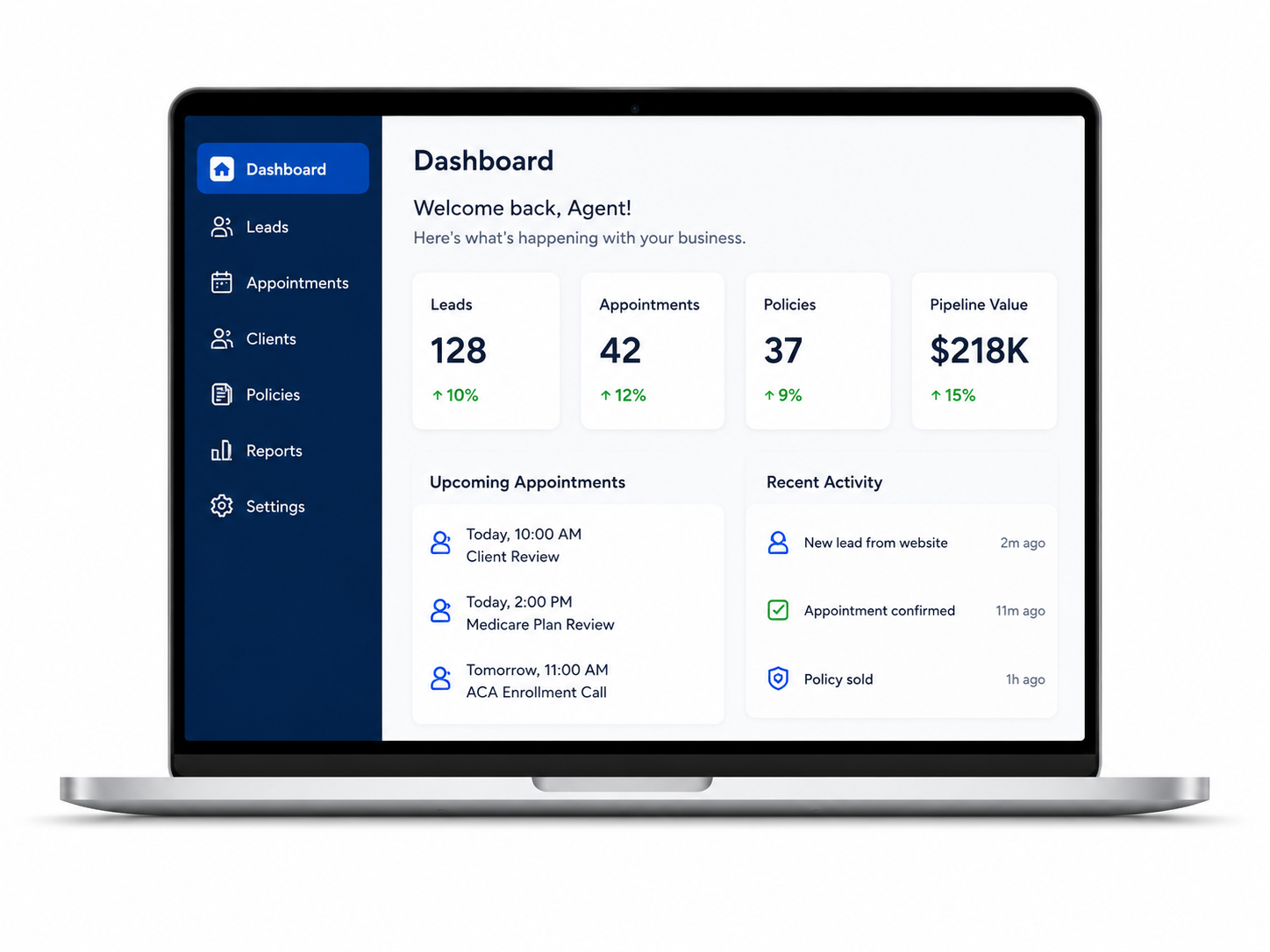
A Digital Agent may need:

Quoting and enrollment technology
Compare plan options, prepare quotes, and complete applications through secure enrollment platforms.

Customer relationship management
Organize prospect and client information, track activity, manage follow-up, and monitor opportunities in one system.
Call recording and storage
Record applicable sales calls and securely retain recordings according to compliance, carrier, and business requirements.

Lead management
Capture, assign, prioritize, and track leads from the first inquiry through appointment, enrollment, and follow-up.

Email and text automation
Send timely reminders, follow-up messages, client updates, and marketing communications through automated workflows.

Appointment scheduling
Allow prospects and clients to book meetings online while reducing scheduling delays and missed appointments.

Scope of Appointment tools
Collect, document, and store Scope of Appointment forms through a secure digital process before applicable Medicare sales discussions.
Training and Resources for Insurance Technology
Essential Business Tools for New Insurance Agents
Learn which core technologies can help you manage leads, communicate with clients, schedule appointments, complete enrollments, organize records, and operate your business more efficiently.
Medicare and ACA Enrollment Platforms
Explore quoting and enrollment solutions for Medicare, ACA, and life insurance, including tools that help agents compare plans, manage client information, and complete applications through a more streamlined workflow.
CRM Solutions for Insurance Agents
Discover how an insurance-focused CRM can centralize lead information, automate follow-up, track opportunities, manage renewals, and provide better visibility into your daily business activity.
Explore the PSM Insurance Agent Platform
Review additional PSM technology solutions for enrollment, CRM, lead management, marketing, automation, compliance, and scalable agency operations.
Your Digital Agent Action Plan
- Choose your primary lead source.
- Establish a realistic weekly lead budget.
- Create a standard call and qualification process.
- Set up your CRM and follow-up stages.
- Confirm your call-recording and compliance procedures.
- Build or improve your website and social presence.
- Track contacts, appointments, applications, and cost per sale.
- Improve one part of the process every month.

Build My Digital Agent Strategy
Build a practical digital sales strategy around the lead sources, technology, follow-up systems, and marketing channels that fit your goals. Use this plan to create a more consistent workflow, improve your online visibility, respond to prospects faster, and turn more digital opportunities into appointments and long-term client relationships.
The Local Agent Path
Build a Trusted Presence in Your Community
The Local Agent grows through personal relationships, community visibility, professional partnerships, referrals, educational events, and face-to-face appointments.
This path may fit you if you:
- Enjoy meeting and talking with people
- Are comfortable networking in your community
- Prefer in-person appointments
- Like speaking to groups
- Want to build a recognizable local brand
- Have more time than marketing budget
- Are willing to develop relationships gradually
- Want referrals to become a major source of business

Step 1: Build Your Local Marketing Plan
Local marketing helps you become visible in the places where prospects already live, work, gather, and seek help. Rather than relying on a single campaign, build a repeatable local strategy that combines community visibility, professional relationships, referrals, educational outreach, and a strong local online presence.
Start by choosing two or three activities you can manage consistently. The goal is to become a familiar, trusted resource in your market—not simply to promote insurance products. Your plan should identify where you will show up, how often you will participate, how prospects can contact you, and how you will follow up with the people you meet.
Your local marketing plan may include:
Community Events
Participate in health fairs, neighborhood events, business expos, and other local gatherings where you can meet prospects and strengthen community awareness.

Senior Centers
Build relationships with senior-center staff and look for appropriate opportunities to provide educational information, participate in community programming, or support local events.

Public Libraries
Use library meeting rooms for compliant educational events, Medicare presentations, and other public programs that help residents better understand their options.

Local Business Groups
Join chambers of commerce, networking organizations, and professional associations that can introduce you to business owners, community leaders, and potential referral partners.

Direct Mail
Use targeted postcards, educational invitations, newsletters, and other compliant mail campaigns to reach prospects within specific ZIP codes or service areas.

Neighborhood Social Media Groups
Participate in local Facebook groups, Nextdoor communities, and neighborhood pages by sharing useful information and becoming a recognizable local resource.

Local Search Optimization
Improve your visibility when prospects search for insurance help in your city, county, or ZIP code by maintaining accurate listings and creating useful location-focused content.

Google Business Profile
Keep your profile complete and current with accurate contact information, service areas, business hours, photos, updates, and client reviews.

Client Referrals
Create a repeatable process for asking satisfied clients for introductions and making it easy for them to connect friends or family members with you.

Educational Presentations
Host compliant educational events that explain Medicare or other insurance topics without turning the presentation into a product-specific sales meeting.
Training and Resources for Local Marketing
Local Marketing Strategies for Insurance Agents
Build a practical local marketing system involving community visibility, professional referral relationships, Google reviews, educational outreach, and consistent follow-up.
Weekly Lead Generation Plan for Insurance Agents
Create a weekly schedule built around dedicated prospecting blocks, multiple active lead sources, and activity goals tied directly to your production targets.
How to Build a Referral System for Insurance Agents
Learn how to identify natural referral moments, make a specific request, create an easy introduction process, and consistently follow through with clients and prospects.
How to Host an Insurance Educational Event
Follow a structured process for choosing a venue, promoting the event, preparing the presentation, managing the room, and conducting compliant post-event follow-up.
Explore Insurance Agent Growth Training
Find additional PSM training on lead generation, educational events, referral systems, Google reviews, relationship marketing, follow-up, and building a more consistent local pipeline.
Step 2: Develop Community Partnerships
Strong local agents build professional relationships with organizations that already serve the people they want to reach. These relationships can increase your visibility, strengthen your reputation, and create a steady source of introductions over time.
Potential Community Partners
The goal is not to walk into a business and immediately ask for leads. Begin by learning about the organization, the people it serves, and the problems its staff regularly encounters. Then look for appropriate ways to contribute educational value, support its clients or members, and become a dependable local resource.
Your follow-up system should make it easy to see where every prospect and client stands, what happened during the last interaction, and what action needs to happen next.
What a Strong Partnership Process Should Include
A repeatable partnership system should document:
- The organization and primary contact
- The audience it serves
- The initial conversation date
- Potential ways to provide value
- Materials or presentations offered
- Referral or introduction procedures
- Compliance considerations
- The next follow-up date
- Results and future opportunities
Track these relationships in your CRM just as you would track leads. Professional partnerships often develop slowly, so documenting progress helps prevent good opportunities from being forgotten.
How to Begin the Relationship
Start with a simple introduction that explains who you serve and the type of educational support you provide. Keep the initial conversation focused on the organization rather than your own production goals.
Useful opening questions may include:
- What questions do your clients or members frequently ask about Medicare?
- Are there certain times of year when those questions increase?
- Do you currently offer educational resources or presentations?
- Are there gaps in the information available to the people you serve?
- What would make a partnership useful to your organization?
These questions help you understand whether there is a genuine opportunity to contribute rather than forcing a relationship that does not fit.
Value-Based Care Organizations
Connect with organizations focused on coordinated care, preventive health, and improved patient outcomes. Look for opportunities to support Medicare education without disrupting the organization’s clinical responsibilities.
Primary Care Practices
Introduce yourself to practice managers and patient-support teams. Offer clear educational resources that may help patients understand general Medicare concepts and where to seek licensed assistance.
Dental and Vision Providers
Build relationships with offices that frequently serve Medicare-age clients. These professionals may encounter patients with questions about ancillary benefits, coverage gaps, or available plan resources.
Pharmacies
Independent and community pharmacies often have strong relationships with local residents. Educational materials, community events, or general Medicare presentations may provide useful support to their customers.
Senior Living Communities
Develop relationships with activity directors, resident-services teams, and community administrators. Offer educational programming that helps residents and families understand Medicare-related topics without turning the event into an immediate sales presentation.
Financial and Tax Professionals
Financial advisors, CPAs, tax preparers, and retirement professionals often serve the same audience but address different needs. A well-defined professional relationship can create opportunities for mutual education and appropriate introductions.
Community and Faith-Based Organizations
Community centers, nonprofit groups, churches, and other faith-based organizations may provide access to educational events, volunteer opportunities, newsletters, or resource fairs.
Training and Resources for Community Partnerships
Local Marketing Strategies to Attract High-Quality Insurance Leads
Explore practical approaches for building referral relationships with professionals who already serve your target audience but do not directly compete with you.
How to Build a Referral System for Insurance Agents
Create a repeatable system for identifying referral opportunities, making the request, documenting introductions, and following up with both clients and prospects.
The Importance of Client Referrals and How to Get Them
Review practical ways to develop relationships with complementary professionals such as financial planners, pharmacists, P&C agents, attorneys, and senior-living organizations.
Download the Local Lead Guide
Use the guide’s outreach language and partner ideas to begin building referral loops with local professionals and community organizations.
Build Partnerships Before You Ask for Referrals
The strongest community relationships are built through repeated value, reliability, and trust. Focus first on helping the organization serve its audience more effectively. When the relationship is genuine and the referral process is clear, introductions can develop naturally over time.
Step 3: Host Educational Events
Educational events allow you to demonstrate your knowledge, build local credibility, and answer common questions before asking someone to become a client. Instead of beginning with a sales conversation, you create a low-pressure environment where attendees can learn, ask questions, and become familiar with you as a trusted local resource.
A successful event requires more than reserving a room and preparing a presentation. You need a clear topic, an appropriate venue, a compliant promotion plan, professional materials, an organized attendee experience, and a defined follow-up process. When these pieces work together, educational events can support local visibility, professional partnerships, appointment generation, referrals, and long-term client relationships.

Build the Event Around a Clear Topic
Potential topics may include:

Understanding the parts of Medicare
Medicare Advantage versus Med Supp
What happens when you turn 65
Medicare enrollment periods
Prescription drug coverage basics
Preparing for retirement healthcare costs
Common Medicare mistakes to avoid
How annual plan reviews work
Medicare terminology explained simply
Resources available to caregivers
Create a Repeatable Event Process
A strong educational-event system should address every stage of the attendee experience.
Choose the Event Type - Determine whether the event will be educational or sales-oriented before you create promotional materials or plan the presentation. The distinction affects what may be discussed, distributed, collected, and scheduled.
Select the Venue - Choose a location that is accessible, easy to find, comfortable, and familiar to the community. Review parking, room capacity, lighting, sound, seating, technology, signage, and accessibility before confirming the space.
Create the Presentation - Keep the content simple, organized, and focused on the advertised topic. Use plain language, visual examples, and short sections rather than dense slides or technical explanations.
Prepare Professional Materials - Create a coordinated set of event materials, which may include invitations, flyers, social posts, mailers, presentation slides, handouts, signage, appointment-request materials, and follow-up communication. Professional materials help the event feel credible and organized.
Establish an RSVP Process - Decide how attendees will register by phone, online form, email, QR code, or a local partner. Keep the process simple and confirm what information may be collected based on the event type.
Send Reminders - Use email, text, or phone reminders before the event to reduce no-shows. Include the date, time, location, parking instructions, and what the attendee should expect.
Plan the Room Experience - Prepare a clear check-in process, visible signage, comfortable seating, printed materials, and a defined way to handle individual questions without disrupting the presentation.
Provide a Clear Next Step - Explain how attendees can request additional assistance after the event. The next step should feel helpful and optional, not pressured.
Follow Up Promptly - Send a thank-you message, provide promised resources, contact appropriate attendees, document interactions in your CRM, and continue educational follow-up with people who are not ready to schedule immediately. Event follow-up should be planned before the seminar occurs.
Promote the Event Through Multiple Channels
Do not rely on a single flyer or social post. Treat the event as a small local marketing campaign.
Your promotion strategy may include:
- Direct mail to selected ZIP codes
- Email invitations to clients and prospects
- Social media posts and paid ads
- Facebook event listings
- Client referral invitations
- Local partner promotion
- Library and senior-center calendars
- Community bulletin boards
- Faith-based newsletters
- Local newspaper event listings
- Pharmacy or professional-office relationships
- Reminder calls and texts
The event itself builds trust; the follow-up process turns that trust into future conversations.
Your system should define:
- How attendees will request additional help
- What permission is required before follow-up
- Who will contact each attendee
- How quickly follow-up will occur
- Which attendees should be prioritized
- How appointment requests will be scheduled
- What information will be documented
- How long-term prospects will be nurtured
- How event results will be measured
Training and Resources for Hosting Educational Events
How Agents Can Use Educational Events to Build Trust and Book Appointments
Learn how to choose a venue, promote a Medicare seminar, build local partnerships, prepare materials, create an attendee experience, and develop a follow-up process that leads naturally to appointments.
Best Practices for Hosting a Medicare Sales or Educational Event
Review the differences between educational and sales events, including permitted activities, prohibited activities, marketing considerations, and event compliance checklists.
Educational Event Compliance Basics
Understand the distinction between educational and sales events, which materials may be used, what information may be collected, and what activities are restricted.
Marketing Materials for Insurance Agents
Explore how professional flyers, invitations, presentations, business cards, direct mail, and digital materials can improve credibility and support event promotion.
Step 4: Use Compliant, Professional Marketing Materials
Local outreach materials should do more than display your name and contact information. They should help prospects understand the purpose of your outreach, reinforce your credibility, and provide a clear next step.
The materials used at a community event may be different from those used during a professional referral meeting, educational seminar, direct-mail campaign, or social media promotion. Before creating anything, consider where the material will appear, who will see it, what action you want the audience to take, and which compliance requirements apply.
A consistent visual identity also matters. Your logo, contact information, colors, messaging, and professional disclosures should appear consistently across print and digital materials so prospects can easily recognize your business.
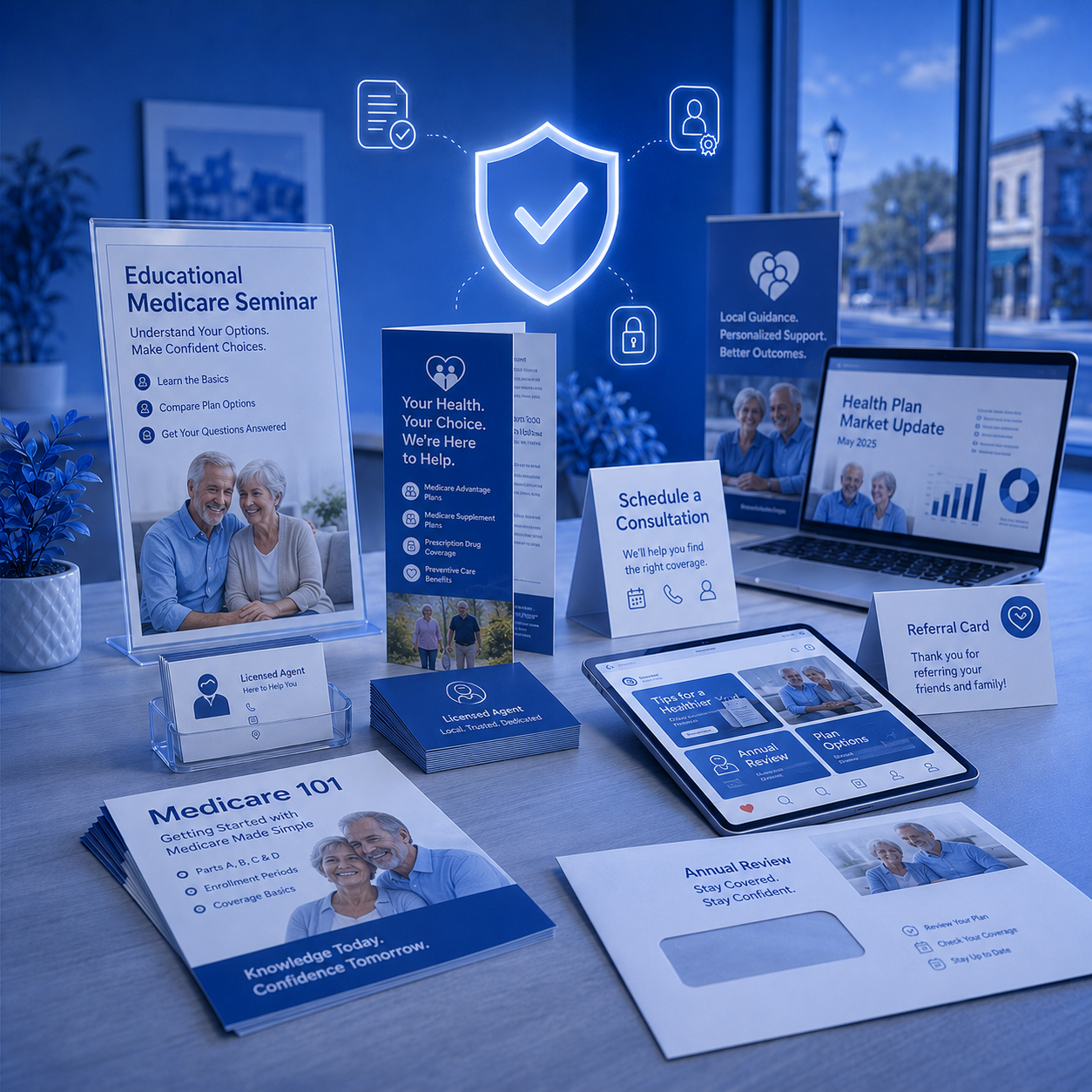
Materials you may need:

Business Cards
Use professional business cards that clearly display your name, agency, phone number, email address, website, and other required information. Keep a supply available for meetings, community events, presentations, and referral partners.

Educational Flyers
Create simple flyers that explain a topic, promote an educational resource, or invite prospects to learn more. Use clear language and avoid making the flyer feel overly promotional when it is intended for an educational setting.

Seminar Invitations
Include the event topic, intended audience, date, time, location, registration instructions, and what attendees can expect to learn. The invitation should accurately identify whether the event is educational or sales-oriented.

Event Signage
Use signs to help attendees locate the room, complete registration, find available materials, and understand where to request additional information. Clear signage makes an event feel organized and professional.

Appointment Request Cards
Give interested attendees a simple way to request a future conversation. The card should collect only the information needed to follow up and should clearly explain what the prospect is requesting.

Referral Cards
Make it easy for clients and professional partners to introduce someone who may need assistance. Include your contact information and a brief explanation of the type of people you serve.

Presentation Materials
Use organized, easy-to-read slides and handouts that support your message without overwhelming the audience. Presentations should use plain language, large text, clear visuals, and an appropriate compliance review process.

Social Media Graphics
Create coordinated graphics for event promotion, educational reminders, local announcements, and follow-up communication. The message and required disclosures should remain readable on mobile devices.
Match the Material to the Activity
Not every outreach activity requires the same materials.
For a professional partnership meeting, you may need a business card, a short agency overview, and a useful educational resource. For a community event, you may need signage, handouts, appointment-request cards, and follow-up materials. For an educational seminar, you may need invitations, presentation slides, attendee handouts, registration materials, and a compliant process for requesting future appointments.
Creating a standard material checklist for each type of activity can reduce last-minute work and help ensure that important compliance elements are not overlooked.
PSM Marketing Hub
PSM’s Marketing Hub gives independent agents access to practical marketing support, compliant materials, digital content, campaign guidance, and personalized strategy. Whether you need help improving your website, creating social media content, building trust online, promoting educational events, or developing a more consistent marketing plan, our team can help you put the right pieces in place.
Explore the PSM Marketing Hub and discover the tools, resources, and support available to help strengthen your visibility, attract more prospects, and grow your business.
Step 5: Create a Referral System
Referrals should not depend on remembering to ask occasionally. A strong referral strategy turns satisfied clients, professional relationships, annual reviews, and post-sale service into a repeatable source of new introductions.
The system should define when to ask, how to ask, how the introduction will be made, where the referral will be recorded, and what follow-up happens next. The goal is to make referrals feel like a natural extension of good client service—not an awkward or unexpected sales request.
Build Referrals Into the Client Experience
The best referral opportunities usually occur after the client has received clear value. This may be after an enrollment is completed, a service issue is resolved, a helpful annual review is conducted, or the client expresses appreciation for your support.
Instead of using a general request such as “Do you know anyone who needs insurance?”, make the request specific and easy to act on. For example, ask whether the client knows someone who is approaching age 65, retiring, reviewing Medicare options, or looking for a licensed local agent.
A Referral System May Include
- Post-Enrollment Follow-Up
- Client Thank-You Messages
- Annual Reviews
- Referral Cards
- Email and Text Requests
- Professional Partner Follow-Up
- Client Appreciation Activities
- Review Requests
- Referral Tracking
Make the Request Specific and Natural
A strong referral request explains who you can help and removes uncertainty about what the client should do next.
Possible language includes:
“I’m glad we were able to get everything taken care of. I also help people who are approaching 65 or who feel unsure about their current Medicare coverage. Is there anyone in your family or circle who might appreciate the same kind of guidance?”
For a professional partner:
“I work with clients who need help understanding Medicare and health insurance options. When one of your clients has questions in that area, I would be glad to serve as a licensed educational resource. I will keep you informed and handle the introduction professionally.”
The request should feel helpful and low-pressure. Avoid asking clients to share someone else’s contact information without permission.
Track the Right Information
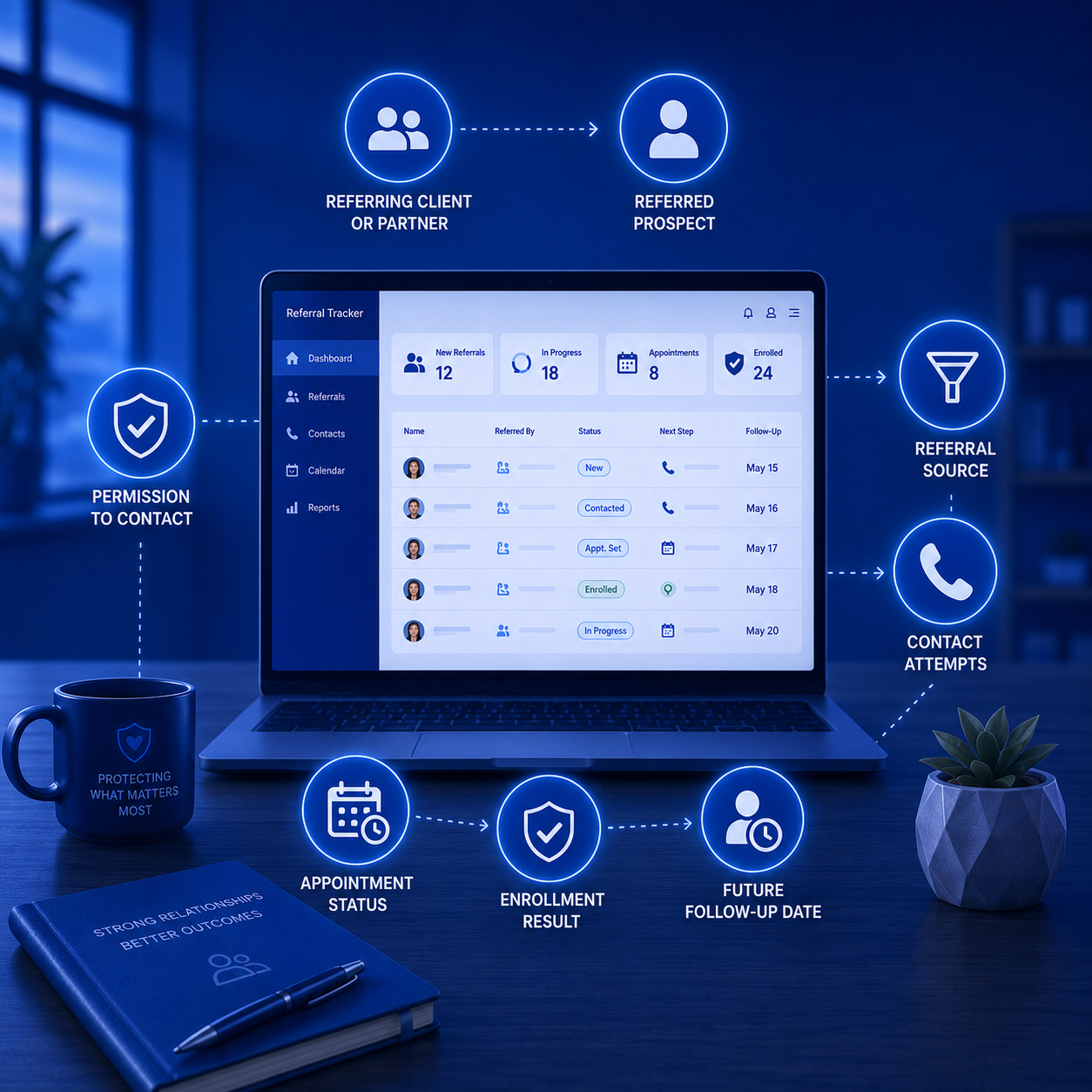
Your referral system should document:
- Referring client or partner
- Referred prospect
- Date of introduction
- Referral source
- Permission-to-contact status
- Product or coverage interest
- Assigned agent
- Contact attempts
- Appointment status
- Enrollment result
- Thank-you communication
- Future follow-up date
Tracking referrals allows you to identify which relationships and activities consistently generate opportunities. It also prevents introductions from being forgotten after the first contact attempt.
Training and Resources for Client Referrals
How to Ask for Insurance Referrals the Right Way
Learn when to ask, what to say, and how to make the introduction process easy for the client.
How to Build a Referral System for Insurance Agents
Create a structured workflow for referral requests, introductions, tracking, follow-up, and ongoing client communication.
After the Insurance Sale: Client Follow-Up Basics
Build a post-sale process that supports client satisfaction, retention, annual reviews, and future referral opportunities.
How to Build Professional Referral Partnerships
Learn how to develop relationships with professionals and organizations that already serve your target audience, then create a clear and compliant introduction process.
Your Local Agent Action Plan
- Define the geographic area you want to serve.
- Claim and improve your Google Business Profile.
- Identify 20 potential community partners.
- Introduce yourself to at least three organizations each week.
- Choose one educational event topic.
- Secure a local venue and promote the event.
- Prepare approved materials and a follow-up process.
- Ask satisfied clients for reviews and referrals.
- Record every lead source in your CRM.
- Repeat the activities that produce appointments.

Build Your Insurance Business With the Right Support
Getting started in insurance can feel overwhelming, but you do not have to figure it out alone. PSM Brokerage helps new agents build a strong foundation with carrier contracting, product guidance, training, sales tools, marketing resources, enrollment technology, and experienced support.
Whether you are preparing for your first appointment or working toward consistent production, our team is here to help you move forward with confidence.
Talk to PSM
New Insurance Agent FAQs
How do I get started as a new insurance agent?
Start by choosing the markets you want to serve, completing the required licensing and certifications, and partnering with an FMO that can help you get contracted with the right carriers. You will also need a basic sales process, compliant marketing materials, and a system for tracking leads and clients.
What is an FMO, and why do I need one?
A Field Marketing Organization, or FMO, supports independent insurance agents with carrier contracting, training, compliance guidance, marketing resources, technology, and ongoing business development. The right FMO can help you avoid common mistakes and build your business faster.
Which insurance products should I offer first?
Many new agents begin with a focused portfolio instead of trying to sell every product at once. Your ideal starting point will depend on your licenses, market, experience, and target audience. PSM can help you select products that work well together and align with your business goals.
How do I get contracted with insurance carriers?
Carrier contracting typically includes completing an online application, submitting licensing information, completing required certifications, and passing a background review. PSM helps agents identify the right carriers and guides them through each step of the contracting process.
Do I need to complete Medicare certifications?
Agents who plan to discuss or enroll clients in Medicare Advantage or Part D plans must complete the required annual certifications, including AHIP or an approved alternative and each carrier’s product training. Requirements vary by carrier and must be completed before you can market or sell those plans.
What tools do I need to manage my business?
At minimum, you need a CRM or lead-tracking system, a professional email address, a phone system, secure document storage, quoting and enrollment technology, and a reliable follow-up process. Starting with simple systems is better than waiting until everything is perfect.
How does PSM Brokerage support new agents?
PSM helps independent agents with carrier contracting, product selection, training, marketing resources, lead-generation strategies, enrollment technology, compliance support, and personalized guidance. You remain independent while gaining access to the tools and experience needed to build a stronger business.